Thursday, July 09, 2009

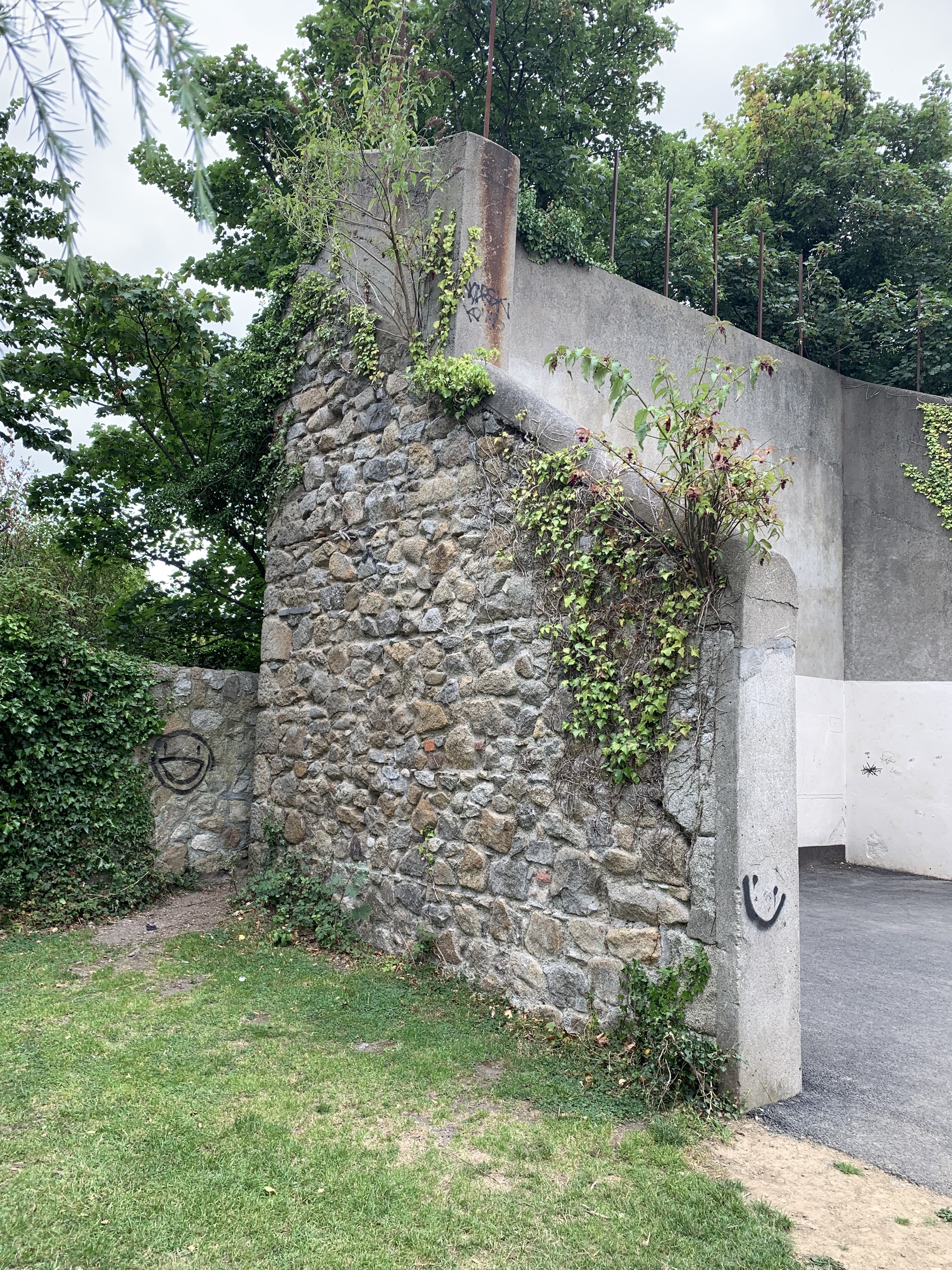
St. Helen's, Booterstown, Dublin [alley demolished]


Photograph and text by E. Timoney, July 09
Alley is now gone. This is now a hotel in the Radisson Group since 1998. The congregation of the Irish Christian Brothers had their headquarters here from 1925 to 1988
Read More......

Kill O' The Grange Garda Station, Dublin


Photographed by E. Timoney, July 09
Read More......

Presentation College, Glasthule, Co. Dublin.


Presentation College, Glasthule, Co. Dublin.
Photographs and text by E. Timoney, July 09
This School closed in 2007. The School has 1958 written on wall. The 2 alleys possibly built at this time also.

Read More......

Blackrock College, Dublin


Blackrock College, Dublin
Photographs and description by E.Timoney July 09
Blackrock College, Blackrock Co. Dublin.

Alley built in 1938/39. Concrete, which can be seen from photo of outside of
front wall. Outside Side Walls pebbled dashed. Inside walls in good
condition.Fr Farragher recounted that Michael Cusack, founder of the GAA played
handball here. He was a teacher in the college. Fr Farragher showed photos of older alleys which have since been demolished when a school
extension was built.
Read More......

Wednesday, July 08, 2009

St. Mary's School, Galway City


St. Mary's School, Galway City
Photographed by E. Timoney, July 09
Read More......

St. Enda's School, Galway City


St. Enda's School, Galway City
Photographed by E. Timoney July 09
Read More......

Barna, Co. Galway


Barna,[near Silver Strand], Co. Galway
Photographed Jul 09 by E.Timoney
Read More......

Friday, July 03, 2009

Newport School, Waterford City


Photographs and information below from S.Ryan June 2009
Originally a country house in the owernship of Mr. Wyse, it was bought by the Quakers in 1798 to become a boarding school, most likely for 2nd level students. The date of construction of alley is unknown but a map of school and grounds dating from 1856 shows an alley and plans to incorporate part of it into a larger alley, subsequently undertaken (and shown on map of school dated 1916). The map shows dimensions of original alley (located in a courtyard) as 32.7 feet wide by 33 feet with the direction of play unclear. The later alley, a 1-one wall was 42feet wide and was known to have been divided into 2 alleys as early as 1937 when the school began organising junior and senior handball competitions, possible related to efforts to have the school incoportated into the state school system, as up to then it was provately fundded by the Quarkers. Two buildings flank either side of the alley and are 33 feet long.

Read More......

Saturday, June 27, 2009

Tara Hall, Courtown, Co. Wexford


Tara Hall, Courtown, Co. Wexford
Photograph and following text taken from NIAH website http://www.buildingsofireland.ie/Surveys/Buildings/BuildingoftheMonth/Archive/Name,668,en.html
TARA HALL (1914), COURTOWN, COUNTY WEXFORD: AN EARLY TWENTIETH-CENTURY DANCE HALL BUILT BY A MR. REDMOND RETAINING THE BASIS OR SHELL OF A LATER NINETEENTH-CENTURY HANDBALL ALLEY PUT IN PLACE BY THE EARL OF COURTOWN
Read More......

Loughrea, Co.Galway


Photograph and description provided by C.Moorehead
Aerial photo of 2 alleys. In right foreground former police barracks,to left the old three walled alley and in right background the 60/30
Read More......

Thursday, June 25, 2009

Pigeon House Fort, Ringsend, Dublin 4


Pigeon House Fort, Ringsend, Dublin 4
Photograph and information provided by A. Giacometti, June 2009

This Handball Alley is in the Pigeon House Fort, Ringsend, Dublin 4. It is in good condition, if slightly overgrown, and is very large, perhaps measuring 10m by 20m in size.The handball alley was constructed by the British when the site was in use as a military barracks between 1798 and 1897, probably, although it is possible that it was constructed later when Dublin Corporation bought the land for use as a sewerage treatment works.
Read More......

Saturday, June 20, 2009

Rathdowney, Co. Laois


Rathdowney, Co. Laois
Photographed by T.J. Ryan, May 2009
Read More......

Killeigh, Co. Offaly


Killeigh, Co. Offaly
Photographed by T.J. Ryan, May 2009
Last photograph and following text from NIAH
http://www.buildingsofireland.ie/niah/search.jsp?type=record&county=OF®no=14813010
1900 - 1940
Handball alley, built c.1920, with rendered and concrete walls. Concrete slabs to floor. Shamrock detail incised into north wall.

This handball alley, located in the centre of the village green, is a focal point of Killeigh. Handball alleys are representative of Ireland's social history. During Ireland's emergence as an independent nation, the sport increased in popularity. From the late nineteenth century onwards, courts were erected in many villages and towns, creating centres of communal recreation. During the latter part of the twentieth century handball alleys' appeal waned with the result that many alleys have since fallen into disrepair due to disuse and neglect.


Read More......

Crinkle,Co.Offaly


Crinkle,Co.Offaly
Photographed by T.J. Ryan May 2009
Read More......

Toor, Co.Tipperary


Toor, Co.Tipperary
Photographed by Á.Ryan, June 2009
At foot of Keeper Hill between Newport and Rear Cross
Read More......

Blessington, Co.Wicklow [demolished]


Blessington, Co. Wicklow [demolished]
Site of demolished alley in Blessington Co. Wicklow, behind AIB Bank on Main
Street
Photograph by E.Timoney, June 2009
Read More......

Casement Aerodrome, Balldonnell, Co. Dublin


Casement Aerodrome, Baldonnell, Co. Dublin
Photographed by E. Timoney, June 2009
Read More......

Friday, June 19, 2009

Shrule, Co.Mayo


Shrule, Co.Mayo
Photographed by E. Timoney, May 2009
Possibly, this set of alleys was origially 2x 3 Wall alleys back to
back. On one of these a wall has been added down the middle. On the other
side the sidewall has been knocked and another built to narrow the court,
and a third alley built at the back to create 2 enclosed 4 wall alleys.
Read More......

Butt Mullins, Naas, Co. Kildare


Butt Mullins, Naas, Co. Kildare.
Photographed and description by E. Timoney 2009
Butt Mullins Restaurant in Naas. Proprietor Mary Mulligan. Left hand
wall was part of old town wall, and this was the North gate. Butt is a
handball term but this has nothing to do with the name of the restaurant as
it is called after a small man called mullins.
Read More......

Monday, May 25, 2009

Sligo Model Arts Centre concert in alley at Summerhill College, Sun 31st May 5pm


A Sligo Handball Alley, at Summerhill College, is being used by traditional musician and composer Emer Mayock for a contemporary take on a traditional artform.

At 5pm on Sunday evening of the May/June Bank Holiday weekend, Emer will bring traditional music and her own compositions to the handball alley at Summerhill College, Sligo. The music will reverberate around the acoustically challenging, stark, domineering and yet strangely welcoming structure that is the Hand Ball Alley.
Tickets are just €5 and can be purchased in advance from The Model, or on the gate from 4.30pm. This is an outdoor concert so please wrap up warm and wear comfy shoes as you will most likely be standing. The concert is just an hour in length and promises to be something truely spectacular.
For more information see http://sligomodelblog.wordpress.com/2009/05/21/handball_alley_music/
Read More......

Wednesday, May 13, 2009

De La Salle, Waterford


De La Salle, Waterford
Photographed by S. Ryan, May 2009

The folowing informaton provided by S.Ryan from conversation with resident Brother at De La Salle College.

It is believed that a row of 4 handball alleys was built at the time of the opening of De La Salle College in 1892. Two alleys were removed 12-15 years ago to facilitate widening of the road outside the college and the building of a footpath. It was necessary to knock these alleys and rebuild the perimeter wall to the college. Otherwise the alleys remain as when first built with only minor pointing repair work required around some brick on the outside walls.

In 1939 De La Salle closed it doors as a teacher training college and became a secondary school as it remains today. The alleys would havefirst been used by the trainee teachers and later by the school students. From the 1960s students would have competed in Munster Championships. An All Ireland was never won. The alleys are currently used mainly for hurling by both students and the local community although some local people use it for handball, and in the summer months the Treveller community plays handball here.

Read More......

Wednesday, May 06, 2009

Buncrana Castle, Co. Donegal


Buncrana Castle, Co. Donegal
Alley built on North gable of Buncrana Castle/a house dating from the 17c and remodelled in 1718.
Photograph from website http://images.google.ie/imgres?imgurl=http://www.geocities.com/daniel_derry/buncrana_castle.jpg&imgrefurl=http://www.geocities.com/daniel_derry/castles&usg=__X1IUKmNXHokaVAGJ_R3ybjC7Jww=&h=360&w=480&sz=50&hl=en&start=4&um=1&tbnid=Jp-Byd9YSOQx6M:&tbnh=97&tbnw=129&prev=/images%3Fq%3Dbuncrana%2Bcastle%26ndsp%3D18%26hl%3Den%26safe%3Doff%26sa%3DN%26um%3D1
Read More......

Monday, May 04, 2009

Ballymore Eustace, Co. Kildare


Ballymore Eustace, Co. Kildare
Photographed by E. Timoney, April 2009

Following text on Ballymore Eustace Handball by Matt Purcell
My first attempt at recording the history of the Ballymore-Eustace Handball Club was done at the request of Father Browne when he sought a piece on the Club for the 1972 Chronicle. In the 1953 Chronicle Tommy Lynch had covered the Club's history up to 1953 so I decided to cover the period from 1953 to 1972. When the Gaelic Football Club brought out a commemorative book to celebrate the GAA's Centenary Year I had my next opportunity to deal with the Club's achievements. This time I was more ambitious and tried to tell the story of the Club's history up to 1984.

The first thing I discovered when I became interested in the subject was the lack of firm information about the Club's early days. My original source of information was Bernard Purcell but Bernard was no longer with us having died in January 1962. I next spoke with Mickey and Margaret Dowling who suggested that I talk to Christy Byrne who had been Club Secretary during the Club's first period of success in the late twenties and early thirties.

Christy's sad story was that during a spring cleaning of his house all his handball papers and records ended up being dumped. So I was back to square one. Subsequent research of old newspapers in the National Library have yielded no new information. I had some luck when John Clarke of the Dublin Metropolitan Club kindly supplied me with information about the Official Opening ( or Re-Opening ) of our 60 by 30 alley. John was a brother of one of handball's " Greats ", Austin Clarke, and in partnership with Austin he won the 1942 All-Ireland senior hard doubles title. John was an avid handball historian and collector of handball memorabilia.

According to John a group of four players from his Club were involved in the Official Opening of the Ballymore 60 by 30 alley following the plastering of the walls and the laying of a new cement floor and he indicated that the Opening took place on Sunday October 27, 1912. The four players involved took part in exhibition games which resulted as follows :

James Clarke and Tom Redmond ( DMC ) beat Jordan and Devey ;
Peter O'Shea and Joe Kennedy ( DMC ) lost to Farrell and Hickey.

John Clarke thought that Jordan, Devey, Farrell and Hickey were also from Dublin. Jordan and Devey at least would appear to have been Ballymore men as Tommy Nugent of Ballybought ( Profiled in the Echo of November 1977 ) stated :

" He ( Tommy Nugent ) loved handball and he remembers Tom and Joe Morrissey building the BalI Alley in 1910 . They Iived beside the alIey where D r. PurcelI now has his stables. The very first HandbalI CIub was formed by Bernard PurcelI, Ned O' Rourke, Pat Conner, Blacksmith, Jimmy McGrath, Jim Byrne, Schoolmaster, Jack McGee, Myles McGee, Peter Nugent, and Myles Lawlor. He remembers paying his first I / = membership fee. The first singles match played there was between Kit Jordan and Patsy Devoy and the f i rst doubles match between Art Doran and Myles Lawlor versus Jimmy McGrath and himself. He and his partner won. Tommy Leahy was the top player of his time and "I remember playing him for a bet and winning" Tommy recalls gleefully."

Apparently a James Whelan of Ballymore was a member of the " Mets " Club Committee at that time. The source of John's information was his own Club's tradition and a weekly Dublin paper called " Sport ". The James Clarke who played in the exhibition games was John's father and he was also the " Mets " Club Secretary. Leading handball figure of those days, John Lawlor, apparently was in attendance.

If anyone in Ballymore has more information on the Club's early days I would welcome hearing from them. From stories I was told by such as Bernard Purcell I gather the present 60 by 30 alley replaced an earlier alley which had its front wall running parallel to the road that is to say the players would have been facing towards the road instead of facing towards the stables referred to in Tommy's Profile as at present. This would appear to be borne out by the remains of what was probably the old front wall and which is still in existence.

In writing this history I am conscious of the fact that I have very little solid information about handball matters prior to 1950 and also that my personal knowledge only extends back to1952. Likewise my personal knowledge is deficient in respect of the more recent period 1989 to 1999. For the foregoing reasons I am not in a position to do full justice to players who were playing handball at these times.

Tommy Leahy was one of a family of five children who lived with their parents in their farmhouse just above where the Golden Falls Dam was constructed and access to their home was by the Golden Falls Lane or Leahy's Lane as it was also known. In 1929 Tommy Leahy became the pride and joy of the local community when he became the first Ballymore man to win an All-Ireland title. Tommy won that title in a memorable home and away encounter with the reigning I.A.H.U. senior hard singles champion, J. J. Kelly, of Dublin. The first leg was played in the "Boot Inn" alley in Bally¬mun while the second leg was played in Bally¬more. Old-timers recall that the second leg was a great occasion with a capacity crowd present.

There is no doubt that Tommy Leahy captured the imagination of old time Ballymore fans in a way that no other player of his generation did. He was a powerful two¬ handed player, the best of a generation of good handballers, and he dominated the senoir hard singles scene under I.A.H.U. rules from 1929 - 1933. He also won the corresponding doubles titles in 1932 partnered by Jack Byrne and in 1933 partnered by Jimmy Dolan. Tommy also played doubles partnered by Peter O'Rourke.

In addition to J.J.Kelly other well known players he defeated were Paddy Coyne of Carlow and Morgan Pembroke of Dublin. Tommy's sister Bridie was married to Mick McDonald who helped with the running of the Club and provided Tommy with transport for his away from home games. Happily Bridie is still with us and was featured in an article in the February 1998 Edition of the Ballymore Bugle. After his successful handball career Tommy emigrated to England where he died in 1940.

Two generations of the Byrne family contributed to the Ballymore handball scene and experienced All-Ireland successes under both sets of rules. Christy was the first to come to prominance in his role as Secretary of the Club during the Club's first period of success ( 1929 - 1937 ). Christy was a top class hardball maker and supplied the hardball needs of the local players. By all accounts he was a very useful player with whom Tommy Leahy had many a tough work out in preparation for his big games.

Christy's brother Jack made his breakthrough in 1932 when he partnered Tommy Leahy in his hard doubles success. Jack succeeded Tommy Leahy as senior hard singles champion in 1933 and held that title until 1935. I saw Jack in action in the early fifties and his talents were obvious even though he was then well past his best . Jack was the most successful handball player in the family and was a great all round sportsman who played in goal in 1953 on Ballymore's only team to win the Kildare senior championship.

Jack's third son Jackie won an All-Ireland Minor Hardball Doubles medal in 1960 and thus the Byrnes became the first Ballymore family to supply champions from two generations. During a short career Jackie won two Minor Hardball Doubles medals. He was a very fast two handed player who could play hardball and softball equally well. Like his father Jackie was a good all round sportsman.

Jack's youngest son Justin became the third member of his family to win All-Ireland honours when he won the 1973 Junior Hardball Doubles title. Like all the Byrnes he was a stylish, two-handed player who was fast around the alley and a good all round sportsman.

Jack's other sons Myles, Tommy and Declan all were useful handballers while Tommy was a good hardball maker who kept the game alive in the sixties when there was no one else who could master the skill of making the hardball.

Like the Byrnes two generations of Dowlings made their mark at All-Ireland level.
I never saw Michael ( Mickey ) Dowling, Senior, in action but according to Bobbie Grattan Mickey was the best man he ever saw to "kill" a ball off the back wall with either hand. Mickey was one of only two Ballymore players profiled by Tom McElligott in his comprehensive book on handball published in conjunction with the 1984 World championships - Tommy Leahy was the other player profiled. Tom McElligott endorsed Bobbie's view about Mickey ability to " kill " a ball and also obviously held Mickey, who he knew well, in the highest esteem as an exponent of hardball. Mickey succeeded Jack Byrne as senior hard singles champion and was the last holder of that title under I.A.H.U. rules.

Mickey formed a good partnership with Jimmy Dolan and the pair of them won the 1937 senior hard doubles title under I.A.H.U. rules. After the I.A.H.U. ceased operation in 1938 Mickey continued his successful career under I.A.H.A. rules the body supported by the GAA. Under those rules he won a junior hard singles title in 1941 and the corresponding senior title in 1943 and thereby became the only player to win senior titles under both rules. Mickey Dowling was the mainstay of the club for many years. But for the fact that Mickey was a contemporary of the great J. J. Gilmartin he would probably have enjoyed greater success in the alley.

Michael Dowling, like his father before him, took All-Ireland honours when he figured in two team successes in 40 by 20. He was a nice, stylish player who won the All-Ireland junior hard singles title in 1985 and partnered Tom O'Rourke in 1990 to win the senior hard doubles title This success earned the Dowling family the distinction being the first Ballymore family to supply All-Ireland senior champions from two generations. Michael distinguished himself as a great all round sportsman.

Mickey's wife Margaret was a staunch handball supporter and attended all of her son's matches. Margaret also helped with the catering for those who took part in our annual open hardball doubles tournament from 1972 to 1980. On June 10, 1978 Mickey and Margaret attended matches in Croke Park in which Michael was playing. In the course of Michael's game Mickey took ill and died suddenly.

Jimmy Dolan and his brothers Tom and Joe lived in Weaver's Row. Jimmy was for many years a postman while Tom worked with Tom Carroll. Joe when I knew him did not enjoy the best of health. Both Tom and Jimmy played handball with Jimmy achieving a considerably higher measure of success than I gave him credit for when I made my contribution to the Centenary Book. Jimmy was by all accounts a lovely stylish player who as we have seen won senior hard doubles titles with both Tommy Leahy and Mickey Dowling and he won an All-Army senior hard singles championship in 1944.

In the fifties Tom figured in a big challenge match between himself and his younger rival Willie Mahon who also worked for Tom Carroll at the time. The contest attracted a sizeable attendance with the bulk of the support being given to Tom. The first match was followed by a return and while I cannot recall the result of either I can still recall the heartiness of Tom's laughter in the discussions before and after the match.

Peter O'Rourke was a powerful server who was the ideal partner for Tommy Leahy. While Jim Dolan was by all accounts a lovely stylish player who won an All-Army championship in 1944.

Our first junior hardball doubles winners were Willie Grace and Dan Murphy who were sub¬sequently lost to handball through emigration. Bobbie Grattan won his first title in 1947 and later added two senior titles. In what had become a Ballymore hallmark Bobbie was a powerful server who had a flair for the dramatic. I recall Bobbie getting the deadest straight "kill" I ever saw.

Jim Bolger had a short but successful hand¬ball career. Jim had an economical left hand serve which was very effective especially in doubles matches. His career came to an early end when he emigrated. The second grouping of our players which included Willie Grace, Dan Murphy, Bobbie Grattan, Jim Bolger, was completed by Bill Lawlor and Paddy Monaghan. Bill was a left handed player who gave his all in every game he played. At the height of his powers he suffered a broken leg, which put an end to his playing days.

Paddy Monaghan occupies a unique position in the club. His playing career extends way beyond that of any other player of my acquaintance. Originally, Paddy was over shadowed by such as Bobbie Grattan, Jim Bolger, Bill Lawlor, and Liam Evans. In 1953 Paddy partnered Bill Lawlor to success in the All-Ireland Junior Hardball Doubles championship. Due to an objection Paddy and Bill had to win that particular title twice over. In his early days, Paddy was not involved on the official side of things. Paddy became a club official in 1964 and since then he has occupied various posi¬tions both at club and county level. He has the distinction of being the only Kildare man to hold a position on the Leinster Handball Council when he held the position of chairman of that body. Over the years Paddy has travelled the length and breadth of Ireland with our players and also accompanied Tom O'Rourke to San Francisco in 1978 when Tom won the Atlas Travel under 22 trials. There is no doubt that much of the credit for the very successful run the club has enjoyed over the years must go to Paddy. Paddy's special interest has been in juvenile hardball and for his efforts in this area he has received special recognition from Central Handball Council. To prove he was not a spent force on the playing front Paddy made history in 1981 by becoming the first Kildare man to win the Leinster 40 by 20 G.M.S. title.

Billy Doran was a stylish, two handed player who while awaiting employment in the middle fifties got lots of handball practice. It all came good for him in 1957 when he reached three All-Ireland finals winning two of them. Unfortunately handball successes are no substitute for steady employment and shortly after his successes Billy went to England in search of work. Some nine years later he returned home to eventually win a senior title.

Seamie Curran was Billy's partner in both softball and hardball and together they were a formidable duo. Like his partner, Billy Doran, he was equally good at hardball and softball. Like Billy too Seamie also emigrated after his successes. Unlike Billy, Seamie has remained in England where he has settled down.

Robin Winder was the first of four Winder brothers to win an All-Ireland medal when he won a Minor Hardball Double medal in 1958. Since then the Winder brothers have collected a total of nineteen All-Ireland medals. Pius has won ten, Cecil six. Robin two and the late Paddy one. To add to this impressive record Pious' son Trevor has won six. The family has thus accumulated a grand total of 25 All-Ireland medals. Robin was a sound, reliable doubles player who had a great straight "kill".

The late Paddy Winder won his only All¬ Ireland in 1959 when in partnership with Tony Daly he won the Junior Hardball Doubles title in a great match against the Cleere brothers of Tipperary. Paddy had the misfortune of contesting four Senior Hardball Doubles finals unsuccessfully. He was a fine two handed player with a powerful service.

Tony Daly shared Paddy's Junior Hard¬ball Doubles success and two of his unsuccessful Senior Hardball Doubles finals. Tony had two good hands and was very nimble on his feet. All in all he was a very stylish player with great determination. Tony's career was also cut short when he emigrated. In recent times Tony paid a vist to Ballymore and looked up a number of his old handball friends.

When Jackie Byrne won an All-Ireland Minor Hardball Doubles medal in 1960 the Byrnes became the first Ballymore family to supply champions from two generations. During a short career Jackie won two Minor Hardball Doubles medals. He was a very fast two handed player who could play hardball and softball equally well.

John Browne who won a Minor Hardball Double medal in 1961 added a Junior Hard¬ ball Double medal in 1969. All the matches involved in these successes were nail-biting affairs with dramatic turnabouts in the course of two of them. Like good wine John appears to have improved with age as he won no less than four All-Irelands singles titles in the years 1990,1991 and 1992 thereby bringing his total of All-Ireland medals to six.

Greg Lawlor won his first All-Ireland in 1963 at the age of fourteen. Subsequently he added a further six medals, the last of which was a Senior Hardball Double medal in 1977. For a time Greg held the distinction of being our top medal winner. When in form, Greg had a devastating left hand service which made short work of the opposition. He was certainly in the mould of the old style hard¬baller relying on the big service and dead "kill".

Tom Geoghegan was a character who added colour to the handball scene. He first made his mark in the Minor Hardball Double championship in 1963 and enjoyed a consider¬able degree of success over the next nine years culminating in a Junior Hardball Double success in 1972. On top of his successes in the provincial and All-Ireland championships Tom won two All-Army hardball titles and in fact he was the reigning champion when these championships were discontinued in 1966.

Anthony Campbell has All-Ireland medals to his credit in hard¬ball, 40 by 20 handball and softball. Anthony is a very strong server who is fond of the "kill" shot. He has contributed to the administration of the club over a long number of years serving also on the Management Committee. He is a hard worker who con¬tributed to a number of worthwhile improve¬ments to the ball alley including the recent putting in of a new floor in the 60 by 30 alley. In total Anthony has eight All-Ireland medals to his credit.

Ceci1 Winder was the third member of his family to win All-Ireland honours and was adept at the three forms of Handball. While not possessing the same style as Paddy and Pius he surpassed both of them in cunning and tenacity. Supporting Cecil was not good for the heart as he always seemed to be on his last legs yet more often than not he pulled out a little but extra to win. During his career he has had many fine games one which springs readily to mind was a five game match against Joey Maher of Louth in Senior Hardball Singles. While he had another great game in the local Senior Softball Singles trials against Tom O'Rourke when Cecil lost narrowly to Tom.

Eamonn Deegan in partnership with John Browne won the 1969 All-Ireland Junior Hardball Doubles title following a number of very close games. Over the years Eamonn has con¬tributed his fair share on the administrative side both at club and County Board levels.

Next to be considered is our most renowned handballer, Tom O'Rourke. Since first coming to prominence in 1972 Tom has accumulated an extraordinary list of
"firsts". Tom's first love was softball but as his many titles go to show he was more than capable at hardball and 40 by 20 handball as well. If there was any doubt about Tom's standing in 1984 that doubt has been dramatically dispelled by his achievements in 1984 and in subsequent years upto and including 1990. Tom without question is our greatest all round player with All-Ireland successes at senior level in all three forms of handball and a World Title in 60 by 30 Softball. What were his main strong points? Tom was very, very competitive. He had superb foot work and was very fast around the alley. He was also very good at anti¬cipating his opponents next move and was not afraid to experiment during the course of a game if a particular aspect of his game was not working out to his satisfaction. There have been so many outstanding achievements by Torri that it is difficult to pinpoint any par¬ticular one.

One suspects that his success in winning the Centenary Open 60 by 30 championship may well rate as his most satisfying success. In winning Tom comprehensively defeated the reigning All¬ Ireland Coca-Cola and 40 by 20 singles champion Tony Ryan, by 21-10, 21-11. The score would suggest an easy victory for Tom but such was not in fact the case. Having played brilliantly throughout the first game Tom won without ever being in danger. In the second, Ryan made a determined bid to break Tom's stranglehold on the game and for a long time it looked like he might succeed; with the players locked together at 8 all and later at 11 all neither player could make any pro¬ gress. Eventually it wasTom who got the break and his supporters could at last breathe a sigh of relief. After a succession of mis¬fortunes this success meant that Tom had re¬ established himself as the top player in Ireland. Tom won a total of fourteen All-Ireland medals nine of which were at senior level.

On Saturday the 5th of May 1984 Tom proved himself the best in the world when he won the Open 60 by 30 singles title. Tom won all his four matches comfortably. In winning, Tom displayed again the confidence which was a feature of his game when he swept the decks in 1979. While Tom's successes were easy they were not easily gained for Tom had put in many long hours of training and travelled many miles in his quest for the World title. The beautiful Waterford Glass trophy which now adorns his sideboard was well merited.

Pius Winder was the fourth Winder brother to achieve All-Ireland success. Pius was our first player to win All-Ireland medals in two forms of handball when he won the Senior Hardball Doubles title in 1981 and he improved on that in 1982 when he became our first player to win All-Ireland medals in all three forms of handball by playing on the team which won that year's 40 by 20 Inter- Club Open Team championship. All together Pius won ten All-Ireland medals six of which were at senior level. Pius was the first Kildare player to win two senior titles in the same year and in addition he is the only Kildare player to win three senior All-Ireland Hardball Doubles medals in a row. He was a fine stylish two handed player who showed great dedication to training. His finest performance was perhaps his game against the Ryan brothers of Tipperary in the Senior Hardball Doubles All-Ireland final of 1981. He played brilliantly throughout the match to win his first All-Ireland senior medal. He had another great game in the 1983 All¬ Ireland Senior Hardball Singles semi-final against one of hardball's "greats" Peadar Magee (Mayo), in which Pius conceding home venue was narrowly beaten. On the adminis-trative side Pius organised a number of hand¬ball and racquetball tournaments and served on the Committee for a number of years and in addition he held the key of the lights and collected the money.

Justin Byrne became the third member of his family to win All-Ireland honours when he won the Junior Hardball Doubles title. Like all the Byrnes he was a stylish, two-handed player who was fast around the alley.

Michael Dowling, like his father before him, took All-Ireland honours when he figured in two team successes in 40 by 20. He was a nice, stylish player who won the All-Ireland junior hard singles title in 1985 and partnered Tom O'Rourke in 1990 to win the senior hard doubles title

Under I.A.H.U. rules our players held the Senior Hardball title from 1929 to 1936: Tommy Leahy, 1929 to 1933; Jack Byrne, 1934 to 1935 and Mickey Dowling 1935 to 1936. At that time the top handballers were playing under I.A.H.U. rules.
Under I.H.C. rules twenty-six of our players have shared forty-one All-Ireland titles. Thirty-three were in hardball, six were in softball and two were in 40 by 20.

Our top hardballers over the years have been: Tommy Leahy, 1929 to 1933; Jack Byrne 1934-35; Mickey Dowling 1935 to 1948; Bobbie Grattan 1948 to 1960; Paddy Winder 1960 to 1968; from 1968 to 1980 the honour has been shared by Billy Doran, Greg Lawlor, John Browne, Cecil Winder and Tom O'Rourke and Pius Winder 1980 to 1984.

Our top softballers have been: Myles Lawlor; Billy Doran; Ned Deegan; Anthony Campbell; Cecil Winder and Tom O'Rourke.

On top of our All-Ireland successes our players have won many provincial and county titles. But for the scourge of emigration our successes could have been greater. Lost to handball in this way were : Tommy Leahy; Willie Grace; Dan Murphy; Jim Bolger; Liam and Joe Evans; Eddie Whelan and Tom Doran, Michael and Jack Winters, Seamie Curran; Tony Daly; Pat Clarke; Peter and George McGuire; Mick Tackaberry; the Daly brothers, Ray, Dessie and Jerome Lynch; John and Gerry Kelly; Jack Boylan and Joe Nugent. Apart from our All-Ireland winners in the above list, Michael and Jacl Winters had displayed considerable promise while Peter McGuire and Pat Clarke were especially use¬ful players. Peter, I recall giving Billy Doran many a good game at a time when Billy was playing good handball. Pat Clarke was a very useful softball player who had a high degree of ball control.

Who was our best player? I can accept the claims of an older generation that Tommy Leahy was our greatest hardballer but I feel that the Winder brothers, Pius and Cecil, can¬not be too far behind him.The Honour of being our greatest all round handballer I would bestow on Tom O'Rourke. Tom has had major successes in all three forms of handball.

Successes such as our club has enjoyed are not achieved without a lot of hard work. Much of the credit for these successes must go to the following : Add earlier names Christy Byrne, Bernard Purcell, Mick McDonald, Mickey Dowling, Bobbie Grattan, Jim Doyle, Mel Sullivan, Billy Doran, Seamie Curran, Tony Evans, Paddy Monaghan, James Purcell, Eamonn Deegan, Ned Deegan, John Deegan, Martin Deegan, Anthony Campbell, Larry Glancy and Barry Slattery.Add later names ,.

Christy Byrne was a good handballer who frequently gave Tommy Leahy workouts in preparation for his successes. On the official side he kept things ticking over smoothly during one of the club's most successful periods.

Mickey Dowling was the mainstay of the club for many years. But for the fact that Mickey was a contemporary of the great J. J. Gilmartin he would probably have enjoyed greater success in the alley. During the fifties Bobbie Grattan was the club's strongman. Bobbie was an official both at club and County level.

Behind every successful player there is usually to be found either an understanding and encouraging mother or wife. Sufferers in this category that readily spring to mind are the late Mrs. Monaghan, Mrs. Billy Winder, the late Judy Lawlor, Maisie Deegan, Brigid Purcell, Margaret Dowling, Geraldine Winder, Rita O'Rourke and now Jacinta O'Rourke (the latest sufferer!) and many, many more too numerous to mention. The club's thanks are due to all these ladies.

The alley had the gallery and roof added in the mid¬ twenties. In 1953 the walls were raised as softball was beginning to gain a footing. Lights were installed in 1962 and replaced by a new system in 1978. Since then many much needed smaller repair jobs have been carried out.

Hardball which was originally the premier form of handball and which up to the early sixties, was accorded equal standing with softball has had a precarious existence since then. Bally¬more has supplied most of the recent hard¬ball makers. These were Tommy Byrne, Joe McDonald, Paddy Nolan, and Anthony and Mary Campbell. In addi¬tion to the above people who have made hard¬balls over the last 35 years the club's thanks are due to Eddie and Martin Deegan, Markie Doyle, Paddy Monaghan and John Browne all of whom have done their bit to keep the game alive. Despite all the efforts over a long number of years made by Ballymore people to foster hardball sadly there were no All-Ireland championships in hardball at senior level in 1999.

Like many another I played my first hand¬ ball against a gable end. In the summer of 1951 I graduated to the ball alley proper, playing short-ways at first but later on play¬ ing long-ways. Casting my mind back to those far off days I can see again the stately, dignified figure of Pat Kelly coming down the Commons on his bicycle. There again is the small friendly figure of "Granny" O'Rourke or the kindly figure of Maggie Hyland laden down with her shopping bags trudging up Mountcashel hill. The "rabbit men" notably John Madden and Mick Shannon are out lay¬ ing their snares and traps once more. Once again Dick Hayes' uncomplaining ass (and cart) is tied to Mount¬cashel gate.

Initially, I played mainly with my brothers Dan, Billy and Paddy under the protective eye of the Doctor whose presence ensured that "the big lads" did not interrupt our game. In those days our father constantly reminded his sons to use both hands. As a result, we all developed good left hands. My first experience of competitive handball came in 1953 when I played in an under 14 doubles tournament in Tramore. My first taste of handball success came in a singles tournament which I won twice and thereafter the competition was dis¬continued.

With Pat Clarke, Paddy Winder, Tony Daly and my brother Dan, graduating from the minor ranks in 1958 the way was left clear for me to represent Kildare in a11 four minor championships. In the minor soft doubles Robin Winder and myself had the ego shatter¬ing experience of being beaten 21-0 by Joe Cleary and Paddy Reilly of Wicklow, in Donard. If memory serves me correctly things improved considerably in the second game and we got four aces.

The story was different in the minor hard doubles in which Robin and myself actually got to the All-Ireland final. Thereafter things got complicated and we ended up playing the final a week before we were supposed to, and in a different alley to what was originally fixed. All of which was done without the approval of our local oflicials. The game was a ding dong affair although in fairness to my¬ self I don't suppose the five hard games I had the evening before with Mick Higgins was much help to me. The end result was a one ace win for Limerick in the third and final game. Thereafter our officials got to work and about six months later the final was fixed to be replayed. Limerick did not turn up for the re¬ fixture and so I won my first All-Ireland medal outside the alley.

For extra competition, I took part in the 1959 junior softball trials. At an early stage I played Tony Daly and this turned out to be the hardest game of my career. For most of the match Tony was toying with me but with the benefit of an extra break which was not in accordance with the rules I ended up winning after five gruelling games lasting a full two hours. The following morning Ned Deegan put an end to my junior ambitions for 1959. For a long time thereafter I did not want to know about handball. For good measure Joe Cleary put manners on me in the first round of all four minors.

Looking back on the fifties it was a time when the main pastimes in Ballymore were the Brass and Reed Band, Gaelic football and Handball. Entertainment was provided by the Radio and twice weekly, films were shown in the Band Hall together with the occasional play put on by the local Drama Group. Tele¬vision was unknown and cars were few and far between. In the handball circle Bobbie Grattan was the only one with a car of his own. Frequently it was necessary to hire a car to bring players to matches. Those interested in dancing had to travel to neighbouring towns. But during Lent when dancing was not permitted in the Diocese of Kildare and Leighlin it was usual to run dances in the Parish Hall as the "ban" did not apply to the Dublin Diocese.

Ballymore played host to all the top players of the day including John Ryan, John Doyle, Austin Clarke, Paddy Downey, Joe and Christy Delaney, Fintan Confrey, Joe Maher, Joe Cleary and our own Bobbie Grattan. Many important matches including All¬ Ireland finals were played here and not sur-prisingly there were many outstanding matches. In hardball these involved John Ryan and Bobbie Grattan while in softball the most memorable games involved John Ryan and Joe Delaney, John Ryan was a particular favourite with the fans as he was a stylish player with two good hands and was equally good at hardball and softball. His nonchalant approach to the game was deceptive as he rarely came out of a game loosing.

Other memories of the fifties include: the pitch and toss school which formed each week-end while players waited their turn to play Handball ; the games of "scotch" which were played by the youngsters, big and small, when there were too many to play handball ; the invasion which took place daily when the children from the nearby old school were released for lunch ; Bernard Purcell holding forth on his favourite subject handball in Judy Lawlor's kitchen ; and, the "sponge men" such as Barney McKnight, Ned Deegan, Tony Daly and Pat Clarke who were all experts with the sponge ball.
According to Bernard there was one and only one and there would never be another Tommy Leahy. To an aspiring handballer such as myself this was a bit off putting but nevertheless I stuck to the game. Bernard used to remember with amusement the antics and tactical jibes used in the games played among the foursome of "The Liner" Winder, his brother Paddy, Micky Dwyer and Sergeant Dempsey. Judy Lawlor took an active part in these discussions and used to recall the expertise of Fanny Nugent and boasted of her own handballing prowess as a young girl.

Before leaving the fifties I must recall the big challenge between old-timer, Tom Dolan and his younger rival Willie Mahon both of whom worked for Tom Carroll at the time. The first match was followed by a return and while I cannot recall the result of either I can still hear the "cackle" of Tom's laughter in the discussions before and after the match.

The say you cannot keep a good man down and so it was that by 1960 I had recovered my appetite for handball. This became my most successful season when I qualified for four Leinster finals winning three and went on to qualify for three All-Ireland finals winning two. My last year as a minor turned out to be a disaster as despite the presence of a doctor in the house I managed to get sick at the wrong time.

In 1962 I became a junior and I took part in the hardball trials only. It was confidently expected (by me at least) that I would come through without too much difficulty. There was however one or two who had reserva¬tions about this. One of these was Mick Higgins. Mick and I met early on and from the beginning it was clear that Mick was not going to lie down and take his beating as he was supposed to do. In fact after a consider¬able amount of time we were two games all and Mick had a slight lead in the final game when the Angelus bell rang. That turned out to be the longest Angelus in my experience and judging by the subsequent course of the game Mick must have been better in with the man above than I was. Thereafter my hand¬ ball career operated on a low profile for the rest of the sixties with the occasional pro¬vincial medal to relieve the gloom.

In softball the bane of my existence was Ned Deegan who insisted on beating me con¬ sistently. Sometimes by a small margin other times by a large margin but always the result was the same - Ned won. Another who made life diffcult for me was Seamie Clarke. I mean he should have known I was better than him and yet whenever we met and the dust had settled in the alley somehow on another Seamie had won again.
From the beginning I had always beaten John Browne and Eamonn Deegan I could not help it. As fate would have it they teamed up in 1969 and as already related, they graduated to the senior ranks when they won the All-Ireland Junior Hardball Doubles title. Thereafter, they drew a very sharp distinction between a senior player and a mere junior ( such as myself ) especially in my company.

In partnership with John Browne my brother Paddy was narrowly beaten in the 1962 All-Ireland Minor Hardball Doubles final. Four and a half months later Paddy died at the tender age of 18 after a prolonged illness R.I.P.

The sixties was a time when we all became rich (or appeared to) and modern day living began. Thereafter non-essentials became necessities. Televisions, cars, foreign holidays - you name it we had to have it or else we felt deprived. The simple way of life of earlier times became much more complicated and demands on our time were much greater.

Since I came into handball the sixties was the decade that saw the greatest level of activity in the club. We had the greatest strength in depth during that decade than at anytime before or since. Mind you the early sixties saw hardball suffer its first major crisis following the death of hardball maker, Bill Aldridge. Shortly, thereafter I became involved in a compaign on its behalf with which I am still associated and I regret to say that my efforts are more necessary today than ever before.

The seventies saw the introduction of the successful pub tournament under organiser-
-in¬-chief, John Browne. Others who played a key role in this promotion were Eddie Gordan and Liam Burke. This competition brought the spectators back to the alley in numbers which reminded you of the old days. More recently its popularity has dwindled.

Over the years I'm afraid we have neglected our girls. For a time during the seventies they proved themselves to be quite useful. Names which spring to mind are : Tess Reilly now Sammon ; Bridget Sammon ; Anne and Rena Murphy; Anne and Kathleen Mahon ; Mary Cullen ; Angela Miley ; Geraldine and Caroline O'Reilly ; Siobhain Bolger; Eileen Gordon and Margaret O'Rourke.

Belatedly, I graduated to the senior ranks in 1973. In the same year, Paddy Monaghan, Eamon Deegan and myself joined the Na Fianna Handball club in their history making tour of the East Coast of America. The most notable places visited were the New York Athletic Club and the West Point Military Academy.

So far the eighties have seen the introduc¬tion of racquetball to Ballymore. This has proved particularly popular with the girls. Another innovation has been the introduction of turkey tournaments which have proved enjoyable. A less welcome feature of the eighties has been the large scale unemploy¬ ment which has affected many of our hand¬ballers. In 1981 I achieved my life's handball¬ing ambition when I partnered Pius Winder in his All-Ireland Senior Hardball Doubles success. Apologies! I thought I was finished talking about myself when I recorded my success in the 1981 Senior Hardball Doubles champion¬ship. I was not to know that the legendary Pat Kirby of Clare (now Tucson, Arizona) would ask me to play with him in the World Masters 40 by 20 doubles championships and better still that we would win it albeit by the narrowest of margins in the tie-breaker. Dick Lyng (Wexford) and Mick Hogan (Clare) pro¬vided the opposition in the final.


Others who have added to the Ballymore handball scene include : Ned O'Rourke (senior); Myles Lawlor (senior); Ned and Tom Whelan; Tommy Nugent; Master Byrne; Willie and Eddie Grace; Jim Browne; Paddy Hennessey; Tommy McCourt; Mick Devoy; Tommy and Albert Evans.

Coming to more recent times the following are players who have shown ability: "Ned's Brigade" which includes Ned Deegan, Gerry Kelly, George McGuire, Myles Byrne and sometimes Seamie O'Brien ; Joe Nugent ; Bren and Will Hennessey ; Joe Marshall ; John Deegan ; Martin Deegan ; Tim Gorman ; Vinny McDonald ; and last but by no means least the Saudi Arabian himself, Ollie Deegan.

What of the future? Several of our younger players have shown potential. These include John Browne (junior), Garry Bolger, Neil Morrison, Damien Garvey, Shay Mahon, P. J. McGrath, Trevor Winder and Simon McDonald.

In conclusion, I would like to thank the Football Club for providing me with this opportunity of recalling our clubs achieve¬ ments and to compliment them for their enter¬prise in producing this book. On a personal note I would also like to thank Maisie Deegan, Margaret Dowling and their assistants for catering for those who took part in our annual open hardball doubles tournament from 1972 to 1980.

BALLYMORE'S ROLL OF HONOUR

1. Tommy Leahy : 1929 - 1933 Senior Hard Singles ( I.A.H.U.)*
1932 Senior Hard Doubles ( I.A.H.U. )*
1933 Senior Hard Doubles ( I.A.H.U. )

2. Jack Byrne : 1932 Senior Hard Doubles ( I.A.H.U. )*
1933 - 1935 Senior Hard Singles (I.A.H.U.)

3. Jimmy Dolan : 1933 Senior Hard Doubles ( I.A.H.U. )
1937 Senior Hard Doubles ( I.A.H.U. )

4. Mickey Dowling : 1935 - 1936 Senior Hard Singles (I.A.H:U.)
1937 Senior Hard Doubles ( I.A.H.U. )

*************
1941 Junior Hard Singles *
1943 Senior Hard Singles *

5. Willie Grace : 1945 Junior Hard Doubles*

6. Dan Murphy : 1945 Junior Hard Doubles*

7. Bobbie Grattan : 1947 Junior Hard Singles
1949 Senior Hard Doubles *
1950 Senior Hard Singles

8. Jim Bolger : 1948 Junior Hard Singles
1949 Senior Hard Doubles*

9. Bill Lawlor : 1953 Junior Hard Singles
Junior Hard Doubles

10. Paddy Monaghan : 1953 Junior Hard Doubles

11. Billy Doran : 1957 Junior Hard Singles
Junior Hard Doubles
1969 Senior Hard Doubles

12. Seamie Curran : 1957 Junior Hard Doubles


13. Matt Purcell : 1958 Minor Hard Doubles*
1960 Minor Hard Singles*
Minor Hard Doubles
1973 Junior Hard Singles
Junior Hard Doubles;
1981 Senior Hard Doubles
40 by 20 Inter-Club Novice Team. *
1984 World Masters 40 by 20 Doubles.*


14. Robin Winder : 1958 Minor Hard Doubles*
1967 Junior Hard Doubles

15. Paddy Winder : 1959 Junior Hard Doubles

16. Tony Daly : 1959 Junior Hard Doubles


17. Jackie Byrne : 1960 Minor Hard Doubles
1961 Minor Hard Doubles

18. John Browne : 1961 Minor Hard Doubles
1969 Junior Hard Doubles
1990 Silver Masters " A" Soft Singles *
1991 Silver Masters " A" Soft Singles
Silver Masters " A" 40 by 20 Singles *
1992 Silver Masters " A" 40 by 20 Singles.
2000 Emerald Masters “A” 40 by 20 Doubles

19. Greg Lawlor : 1963 Minor Hard Doubles
1965 Minor Hard Doubles
1967 Minor Hard Singles
Minor Hard Doubles
Junior Hard Singles
1969 Senior Hard Doubles
1977 Senior Hard Doubles

20. Tom Geoghegan : 1963 Minor Hard Doubles
1965 Minor Hard Singles
1972 Junior Hard Doubles

21. Anthony Campbell : 1966 Minor Hard Doubles
1981 40 by 20 Inter-Club Novice Team.*
1982 40 by 20 Inter Club Open Team.*
1995 Junior Hard Singles
Junior Hard Doubles
1998 Golden Masters "B" Soft Singles *
Golden Masters "B" Soft Doubles *
Golden Masters "B" 40 by 20 Doubles *

22. Cecil Winder : 1967 Minor Hard Doubles
1972 Junior Hard Doubles
1977 Senior Hard Doubles
1978 Senior Hard Singles
1982 Senior Hard Doubles
1983 Senior Hard Doubles

23. Eamonn Deegan : 1969 Junior Hard Doubles
2000 Emerald Masters “A” 40 by 20 Doubles


24. Tom O'Rourke : 1972 Under 16 Soft Doubles *
1973 Minor Soft Singles*
1976 Under 21 Soft Doubles*
1977 Under 21 Soft Doubles
Junior Soft Doubles*
1979 Senior Soft Singles*
1982 40 by 20 Inter Club Open Team. *
1984 Senior Soft Singles
World Open 60 by 30 Singles.*
1985 Senior Hard Singles
1988 Senior Hard Singles
Senior Hard Doubles
1989 Senior Hard Singles
1990 Senior Hard Singles
Senior Hard Doubles

25. Pius Winder : 1972 Under 16 Soft Doubles*
1976 Under 21 Soft Doubles*
1977 Under 21 Soft Doubles
Junior Soft Doubles *
1981 Senior Hard Singles
Senior Hard Doubles
1982 Senior Hard Doubles
40 by 20 Inter-Club Open Team.*
1983 Senior Hard Doubles
1984 Senior Hard Singles

26. Justin Byrne : 1973 Junior Hard Doubles

27. Michael Dowling : 1981 40 by 20 Inter Club Novice Team*
1982 40 by 20 Inter Club Open Team. *
1985 Junior Hard Singles
1990 Senior Hard Doubles

28. George McGuire : 1981 40 by 20 Inter Club Novice Team. *

29. Trevor Winder : 1988 Under 13 Soft Singles *
1990 Under 15 Soft Singles *
1992 Minor Hard Singles
1995 Junior Hard Doubles
1996 Under 21 Soft Singles *
Under 21 Soft Doubles

30. P.J. McGrath : 1989 Under 16 Soft Singles *

31. Darragh Ward : 1994 Minor Hard Singles
1996 Under 21 Soft Doubles


32. Frank Dooley : 1996 Emerald Masters "B" Soft Singles *
1998 Diamond Masters "B" 40 by 20 Singles *

33. Dermot Howard : 1998 Golden Masters "B" Soft Doubles *
Golden Masters "B" 40 by 20 Doubles *

BALLYMORE'S WORLD CHAMPIONS

1. Tom O'Rourke : 1984 Open 60 by 30 Singles.*

2. Matt Purcell : 1984 Masters 40 by 20 Doubles.*

* Denotes first Ballymore success in particular championship.
Note : Records shown relate to All-Ireland titles except where otherwise stated.

Read More......

Wednesday, April 22, 2009

The Boot Inn, Ballymun, Dublin [demolished]


The Boot Inn, Ballymun, Dublin. The alley has since been demolished.
One of the more famous alleys in Dublin and possibly Ireland.
Photographed by E. Timoney April 09

Read More......

Naomh Fionnbarra GAA grounds, Cabra [demolished]


A Handball Alley was situated on what is now the grounds of Naomh Fionnbarra
GAA club in Cabra.

Photographed April 09 by E. Timoney


The following information on handball in Cabra obtained from the local Cabra Historical Group, [by E. Timoney]

Handball has been played in Cabra since at least the arrival of the Christian Brothers in the last century, when they opened the school for deaf boys, St. Joseph’s, and erected a long single-walled ball alley in the playground there, on which three matches could be played simultaneously, thus bringing twelve boys into action at the same time.
Handball was very popular with both Brothers and boys alike in those old days, outsiders often coming in from the surrounding district for a game with enthusiasts like Brothers Dalton and Johnston and their contemporaries, several of whom were notable exponents.
Famous players also came in from different parts of the city to engage in exhibitions for the entertainment of the Brothers and the boys; in one such exhibition played in the 1920’s four of Ireland’s leading professionals took part – J.J. Kelly, Andy Durkin, Jack Bray and Jas. Clarke “of the Boot”.
Jim Clarke (Prussia Street) and his sons John, Jim, Austin and Frank, played there, the first named in the 1920’s and the others subsequently. The latter organized tournaments there in the 1920’s for youths from the Aughrim Street parish, noted at that period for its number of handballers, P.J.O’Neill, Con Healy, M.Reid, J.W. and C. Clarke being amongst those still remembered as taking part.
Read More......

'The Boogies', John Paul Park, Cabra, Dublin [demolished]


'The Boogies', John Paul Park, Cabra, Dublin
Member of Cabra Historical Group pointing to where two Back to Back alleys were situated in "The Bogies", Cabra (John Paul Park). This is next to the playground

Photographed by E.Timoney April 2009
The following information on handball in Cabra obtained from the local Cabra Historical Group, [by E. Timoney]

Handball has been played in Cabra since at least the arrival of the Christian Brothers in the last century, when they opened the school for deaf boys, St. Joseph’s, and erected a long single-walled ball alley in the playground there, on which three matches could be played simultaneously, thus bringing twelve boys into action at the same time.
Handball was very popular with both Brothers and boys alike in those old days, outsiders often coming in from the surrounding district for a game with enthusiasts like Brothers Dalton and Johnston and their contemporaries, several of whom were notable exponents.
Famous players also came in from different parts of the city to engage in exhibitions for the entertainment of the Brothers and the boys; in one such exhibition played in the 1920’s four of Ireland’s leading professionals took part – J.J. Kelly, Andy Durkin, Jack Bray and Jas. Clarke “of the Boot”.
Jim Clarke (Prussia Street) and his sons John, Jim, Austin and Frank, played there, the first named in the 1920’s and the others subsequently. The latter organized tournaments there in the 1920’s for youths from the Aughrim Street parish, noted at that period for its number of handballers, P.J.O’Neill, Con Healy, M.Reid, J.W. and C. Clarke being amongst those still remembered as taking part.


Read More......

CBS St. Joseph's School for Deaf Boys, Cabra, Dublin


CBS St. Joseph's School for Deaf Boys, Cabra, Dublin
Photographed by E. Timoney February 2009

The following information on handball in Cabra obtained from the local Cabra Historical Group, [by E. Timoney]

Handball has been played in Cabra since at least the arrival of the Christian Brothers in the last century, when they opened the school for deaf boys, St. Joseph’s, and erected a long single-walled ball alley in the playground there, on which three matches could be played simultaneously, thus bringing twelve boys into action at the same time.
Handball was very popular with both Brothers and boys alike in those old days, outsiders often coming in from the surrounding district for a game with enthusiasts like Brothers Dalton and Johnston and their contemporaries, several of whom were notable exponents.
Famous players also came in from different parts of the city to engage in exhibitions for the entertainment of the Brothers and the boys; in one such exhibition played in the 1920’s four of Ireland’s leading professionals took part – J.J. Kelly, Andy Durkin, Jack Bray and Jas. Clarke “of the Boot”.
Jim Clarke (Prussia Street) and his sons John, Jim, Austin and Frank, played there, the first named in the 1920’s and the others subsequently. The latter organized tournaments there in the 1920’s for youths from the Aughrim Street parish, noted at that period for its number of handballers, P.J.O’Neill, Con Healy, M.Reid, J.W. and C. Clarke being amongst those still remembered as taking part.

Read More......

Tuesday, April 21, 2009

Dungarvan, Co. Waterford


Photograph by Neil McDermott
Read More......

Claremorris, Co. Mayo


Photograph by Neil McDermott
Read More......

Clooncan, Co. Roscommon


Photographed by Neil McDermott
Read More......

Thursday, April 09, 2009

Cloonaughill, Co. Sligo


Cloonaughill, Co. Mayo
Photocopy from book "No One Shouted Stop:Death of An Irish Town" (1968) by J. Healy
Read More......

Caherconlish, Co. Limerick [demolished]


Caherconlish, Co. Limerick [demolsihed]
Semi-detached houses [painted yellow] built on site of fomer handball alley
Read More......

Pallas Green, Co. Limerick [demolished]


Pallas Green, Co. Limerick
Alley was at rear of Garda Station. Now demolished.
Read More......

Glore Bridge, Co. Mayo


Glore Bridge(near Kiltimagh), Co. Mayo
Photograph from www.castlebar.ie
Read More......

Pontoon, Co. Mayo


Pontoon, Co. Mayo.
Photograph taken from www.castelbar.ie
Read More......

Belladoona, Co. Mayo


Belladoona, Co. Mayo
Photographs from website www.castlebar.ie
Read More......

Court Devenish, Athlone Town, Co. Westmeath


Court Devenish, Athlone Town, Co. Westmeath. Photographed March 2009 by Á.Ryan
Read More......

Wednesday, April 08, 2009

Bridgetown, Co. Wexford


Bridgetown, Co. Wexford. Photographed March 2009, by S. Ryan
Read More......

Duncannon, Co.Wexford


Duncannon, Co.Wexford
Photographed March 2009 by S.Ryan
Old photograph of Main Street shows handball alley on r.h.s. immediately behind white 3-storey building at botom of hill. Front wall of ally again gable of terrace, side wall to street.

The following information and 1st photograph above from conversation with local resident March 2009.
Originally a 4-wall alley built on land owned by Lord Templemore of Dunbrody House and Abbey (passed away 2 years ago). Since purchased by adjacent landowner. Photograph taken after a storm in October 1966 when alley wall(s) collapsed on top of cars parked in the alley. Edward Joyce is standing beside cars of Billy Blake and Jimmy Bates (of Kilmore quay). The alley was closed after this incident and the remaining walls pulled down.
Read More......

Curraghboy, Co. Roscommon [demolished]


Curraghboy, Co. Roscommon [demolished]. Orginal alley was located in forecourt to new indoor handball alley. 3-walled with opening directly onto footpath.
Read More......

Cornalee, Co. Roscommon [demolished]


Cornalee, Co. Roscommon
Photographed March 2009, by Á.Ryan.
Alley demolished in recent years. Stone and blockwork rubble on ground and overgrown.
Read More......

Tuesday, April 07, 2009

Purts, Co. Roscommon


Purts, Co. Roscommon. Photographed April 2009 by Á. Ryan
Read More......

Ballintileva, Co. Roscommon


Ballintileva, Co. Roscommon
Photographed April 2009 by Á. Ryan. Possibly associated with adjacent national school.
Read More......

Newmarket on Fergus, Co. Clare


Newmarket on Fergus, Co. Clare
Photographed April 2009 by S. Ryan
Read More......

Mount St. Joseph's College, Roscrea, Co. Tipperary


This is the summary

ount St. Joseph's College, Roscrea, Co. Tipperary. Photographed April 2009 by T.J. Ryan
Read More......

Ballydrehid, Co. Tipperary


Ballydrehid,Co. Tipperary. Photographed April 2009 by T.J. Ryan
Read More......

Cashel Co.Tipperary


Cashel, Co. Tipperary. Now used as carpark. Photographed Feb and April 2009 by T.J. Ryan
Read More......

Kilcoran, Co. Tipperary [demolished]


Kilcoran, Co. TIpperary [demolished]
Photographed April 2009 by T.J. Ryan
Read More......

Taghmon, Co. Wexford


Taghmon, Co. Wexford. Photographed March 2009 by Á.Ryan
. Read More......

Trinity, Co. Wexford


Trinity, Co. Wexford. Possibly associated with adjacent national school (1933). Partly demolished in recent years.
Photographed March 2009 by Á.Ryan
Read More......

Wednesday, March 18, 2009

Bridgetown,Co.Wexford


Bridgetown,Co.Wexford
Photographed March 2009 by S.Ryan
Read More......

Thursday, March 12, 2009

Building of the Month

The website of the National Inventory of Architectural Heritage features THE HANDBALL ALLEY as Building of the Month for March 2009. This article is also published in History Ireland magazine. http://www.buildingsofireland.ie/Surveys/Buildings/BuildingoftheMonth/

Every month the NIAH features a building or building type. The archive of features can be accessed on the NIAH website. Every two months, the Building of the Month article is also published in History Ireland Magazine.
Read More......

Monday, March 09, 2009

Lahorna, Co. Tipperary


Lahorna, Co. Tipperary
Photographed March 2009, by T.J. Ryan and August 2008 by S. Ryan [interior]
Read More......

Coleraine Dualla, Co. Tipperary


Coleraine Dualla, Co. Tipperary
Photographed March 2009, by T.J.Ryan
Read More......

Sunday, March 08, 2009

Ballypatrick, Co. Tipperary


Ballypatrick, Co. Tipperary
Photographed by T.J. Ryan, Feb 2009
Read More......

Carrick-On-Suir, Co. Tipperary


Carrick-On-Suir, Co. Tipperary.
Photographed Feb 2009 by T.J. Ryan
Read More......

Tuesday, March 03, 2009

Millmount, Drogheda, Co.Louth


Millmount, Drogheda, Co.Louth
Alley is used by secondary school childrenduring lunch breaks and sometimes during summer holidays.
Photograph from National Inventory of Architectural Heritage http://www.buildingsofireland.ie/niah/search.jsp?type=images&county=LH®no=13622076
See RTE Nationwide Programme aired Feb 4 2009, with feature on Joey Maher, the first Irish Handballer to win World Handball Championship
Read More......

Monday, March 02, 2009

Site of former alley at Aughnacloy, Co. Tyrone [demoished]


Aughnacloy, Co. Tyrone. Photograph and information from E.Timoney. Feb 2009.
Handball alley demolished and St.Mary's Primary School built on the site in early 1990s. Handball alley was in poor shape for a long period prior to demolision. Staff at local Heritage Centre can't remember anyone playing handball in the alley. Reference given to a Sergeant Higgins who was a Handball Champion and possible National Champion.
Read More......

Clara, Truagh, Co. Monaghan


Clara, Truagh, Co. Monaghan. Photographed by E. Timoney, Feb 2009. Built circa 1950s
Read More......

Maide Ban, Co. Cavan


Maide Ban, Co. Cavan
Photographs by E. Timoney, Feb 2009
Read More......

Tullyvin,Co.Cavan


Tullyvin, Co.Cavan
Photographs taken by E.Timoney, Feb 2009
Read More......

Dunshaughlin, Co.Meath [demolished]


Attached to Garda Station in Dunshaughlin Co, Meath. These photographs are hanging in Garda Station building and show the handball alley at the side of the station. The alley was knocked to make car park space in 2001, during rennovation works to the station.
Photographs taken by E. Timoney, Feb 2009
Read More......

Monday, January 19, 2009

Cornagnoe, Ogonelloe, Co. Clare


Carnagnoe, Caher Mountain, Ogonelloe, Co. Clare. Photograph and following text taken from article with permission from author, Michael McNamara.
Some things never change." The young lads would run home from mass on Sunday so they could get in a few games before the big lads came."
This tale was related to John Cooney by Michael Minogue of Cornagnoe about the alley in that part of the parish.Almost 90 years later in the 50s things hadn't changed, we had to do the same thing in order to get our game.
The alleys in Cornagnoe came about when the bog road was built in the 1860s. In one place the road had to be built over a deep dried up river bed. It was approximately 28' wide and 15' deep. The wall from foundation to road level was built with well dressed, level faced sandstone, a natural ball alley. The locals, reaslising the potential of the site as an alley painted the walls with Dobh Bui (some of which still remains, and levelled the floor).
This alley was in use until the early part of this century, when the Gleeson family who arrived to the parish in 1903 gave the site of the present alley to people of the parish [see Ogonelloe blog entry].
Read More......

Glenties, Co.Donegal


Glenties, Co.Dongeal. Photographed Jan '09 by R.Ryan. Museum is built on site of handball alley. Alley was sunken below street levelwith the front wall at the line of the change in concrete colour on footpath. Wall in photos of outhouses is remains of back wall of alley.
Read More......

Friday, January 09, 2009

Ardee, Co. Louth (now demolished)


Ardee, Co. Louth. Photographed and researched Dec 2008 by E. Timoney.
Above is a photo of an old print which is hanging on the wall of the new Library built in 1989. This print shows the site of the present Library. In the left of the photo behind the arched gates is the Handball alleys.
Read More......

Corrinshigagh/Ashburton Co. Monaghan


Corrinshigagh/Ashburton Co. Monaghan. Photographed by E.Timoney, Dec 2008
Following deceription taken from: http://www.monaghan.ie/websitev2/download/pdf/heritage/2006/ArchitecturalSurveyMonaghan2006Part2.pdf, pages 39-40

Freestanding handball alley, built c.1922. Located adjacent to Ashburton former national school at Corrinshigo crossroads. Lower section of handball alley constructed of coursed rubble stone with cut stone quoins. Upper section of alley built-up using modern concrete blocks.
This handball alley, which was in use until recent years, is located at the busy crossroads at
Corrinshigo and is a landmark structure in the landscape. Once a very common sight in
Ireland, handball alleys are becoming less popular with the decline in popularity of the sport. The sports popularity and the construction of many handball alleys throughout Ireland were in part because of the efforts of the GAA who promoted the sport upon its foundation. It is understood locally that the stones in the lower courses of the walls are from an RIC barracks that was burnt and destroyed, c.1922, which contributes an historical significance to the site. The handball alleys in Ireland played important social roles in communities and their survival is a reminder of the social history of early-twentieth century Ireland.
Read More......

St. Mary's College, Marist Fathers, Dundalk, Co. Louth


St. Mary's College, Marist Fathers, Dundalk, Co. Louth. Photographed by E. Timoney, Dec 2008.
Read More......

Dunleer, Co.Louth


Dunleer, Co. Louth. Photographed by E. Timoney, Dec 2008
Read More......

Monday, January 05, 2009

Croke Park, site of demolished alley


Croke Park, Dublin. Site of alley at entrance to Hill 16 demolished in upgrade of Hill 16. Photographed Dec 2008 by E.Timoney.
Read More......

St. Ita's Hospital, Portrane, Co.Dublin


St. Ita's Hospital, Portrane, Co.Dublin. Photographed Dec 2008 by E.Timoney
Read More......

Thursday, December 18, 2008

Dominican Priory, Tallaght, Dublin 24


Dominican Priory, Tallaght, Dublin 24. Photographed December 2008 by E.Timoney. Alley walls seem in good structural condition. Floors in poor condition. Both alleys used for dumping.
Read More......

Ballon, Co.Carlow [demolished]


Ballon, Co.Carlow. This alley is now demolished. The photographs date from 2003 and have been sourced from from the website of photographer Eddie Dawon, with permission [http://www.eddiedawson.com/publish/current/ed_9.shtml].
The Handball Alley had been in poor condition when one wall blew down a storm some years ago. With no interest to rebuild in the alley became a hazard to the national school beside it and was blocked off, and finally knocked down when the road was widened more recently.

Read More......

Monday, December 15, 2008

Tipperary Town


Tipperary Town, Clanwilliam Rugby Ground. Photographed 2008
Read More......

Galbally, Co. Limerick


Galbally, Co. Tipperary. Photographed December 2008. This alley was roofed in 1995.
Read More......

Ballinalard, Co. Tipperary


Ballinalard, Co. Tipperary. Photographed in December 2008. Alley is built in a quarry. Quarry is now disused.
Read More......

Friday, December 12, 2008

Iveagh Grounds, Crumlin, Dublin City


Iveagh Grounds [Guinness Athletic Union], Crumlin, Dublin City. Photographed December 2008 by E. Timoney

This alley is little used today. It was used a lot in the 1950s. It is in good repair.

Read More......

Wednesday, December 10, 2008

Emmanus Retreat Centre, Swords, Co.Dublin


Site of 6 alleys demolished approx. 2004 when centre was refurbished. Alleys were in good condition but considered unslightly.
Photographed December 2008, by E.Timoney
Read More......

Wednesday, November 26, 2008

Brady's Pub, Terenure, Dublin


Brady's Pub, Terenure, Dublin. Photographed Nov 2008 by E.Timoney.Information below from E.Timoney.
This alley at rear of pub is now a Beer Garden for pub with picnic tables and shrubs. According to customers an All Ireland Final was played in this alley but date need to be confirmed. Recalled a Jack Coffey being a particularly good handballer.
Read More......

Dolphin's Barn Fire Brigade Station, Dublin


Dolphin's Barn Fire Brigade Station, Dublin. Photographed Nov 2008 by E.Timoney.
Built with fire station in 1962
Read More......

Tuesday, November 25, 2008

Garda Headquarters, Phoenix Park, Dublin


Garda Headquarters, Phoenix Park, Dublin. Photographed November 2008, by E.Timoney
Read More......

Clough, Co. Kilkenny


Clough, Castlecomer, Co. Kilkenny. Photographed Nov 2008
Read More......

Ballyanne,Co.Wexford


Ballyanne,Co.Wexford. Photographed Nov 2008
On site of former Lime Kiln
Read More......

Ballyshannon, Co. Donegal


Ballyshannon, Co. Donegal
First two photographs taken by C.Timoney May 2009

B+W photogaph from book '100 Years of Handball, Handball, Dongeal and the World', by Pat Holland, published by Voice Books in 2004

Following text from http://www.geocities.com/johngall_99/ballyshannon4050_1.html

The Handball Alley was one of the busiest sports arenas in the town, some of the people who frequented the Alley at that time were Jimmy Rogan, Francie “Titsie” Daly, Dutchie Darcy, Sylvester Maguire Snr., Johnnie Moore, Willie Daly, Dermott Lapsley, Tom, Packie and Francie Gallagher, Jody, Patsy, Eddie and Charlie Rooney, Jim and John Askin, Frankie and Jim Kerrigan, Maurice Murray, Dennis Patton, Mickey Gillen, Jim White, Dan and Benny Dorrian, John, Paddy and Cormac Mc Cready, Thomas Duffy, Jimmy Rooney, Jimmy Coyle, Michael Donagher, Michael White, John, Seamus and Patrick Coyle, Mickey Keenan, Michael Mc Govern, Michael Gallagher, Paddy and Kevin Begley, P.J. Coughlin, Paddy Donagher, Blackie Coyle, Paddy and Alo Hoey, Willie and John Mc Allister, Brendan Farrelly, Sean Mc Dermott, Roger and James Mc Ginley, Francis Smith, Danny, Jack and Jim Downey, Seamie Granaghan, Seamus Darcy, Fergal Gildea, Dennis Lawn. With the help of Francie Gallagher, those listed above are the names that come to mind. The older fellows always took control of the big alley while the younger lads used the side alley, during the summer’s the alley would be packed, it was always a pleasure to sit and watch a good game of handball. Someone who was known to all at that time blew a hole in the Alley in 1957, regardless of this person’s treachery the damage was repaired immediately.
The Handball alley was also a popular venue for Open Air Ceili’s on the odd Sunday evenings during the summers; Cyril Curran and his Assaroe Ceili Band usually provided the music, this was a very popular event for young and old.

Handball Alley Shadowmen, poem by Michael Herron

Ideal companions for comely,crossroads maidens
the Sunday handballers were dancelords
in billowing white shirts and best suit trousers,
watched by older heroes in peaked caps
from behind a knowledge cloud
of Sweet Afton and Woodbine.
Great parochial tournaments mythologising
ordinary men, even the occasional cornerboy,
Celtic gladiators in a concrete arena.
Hard earned appreciation of oldened players,
applauding quietly the clever use of angle and wall.
Hand in,hand out,hand in,hand out,
and savage laughter at a misjudged bounce,
an unanswerable butt greeted by a knowing wink.

How safe we were back then,
mere boys surrounded by a casual posse of Raleighs,
jumbled on the grassbank,
waiting our chance to shine in a Sunday game.
Sitting recently on the crumbling steps,
at the back of the alley,
I found another constant broken,
the front wall scarred by a lightning crack,
the drift of litter and leaves from corner to corner
the only movement now in this forgotten Ulster colosseum.


All the old players scattered,
leaving only handball alley shadowmen.


Read More......

Monday, November 24, 2008

Ullard, Co. Kilkenny


Ullard, Co. Kilkenny. Photographed November 2008
Read More......

Ballykelly, Co. Wexford


Ballykelly Townland, just south of Wexford Town. Photographs and text provided by D.Murphy, NIAH.

The handball alley started out as Ballykelly Catholic Chapel, built in
1796. The chapel was closed pre-1858 when the parish priest had the
congregation move to the larger church at nearby Murntown. The chapel
is marked as in use on the first edition of the Ordnance Survey (1841),
and as disused on the second (1903) and third (1925) editions,
indicating that it was converted to use as a handball alley after 1925.
Adapting the chapel involved the reconstruction of some walls using
mass-concrete, although some sections of the original rubble stone walls
survive.

Interestingly, two markers or wall monuments survive, one on the
exterior and one on the interior. The dedication on the exterior
monument (1824; image 4) is as follows: "Gloria In Excelsis
Deo/IHS/Erected To The Memory Of/The Reverend Dennis Kenny Who/Departed
This Life The 21st Of/August 1824 Aged 38 Years/Requiescant In Pace
Amen".

The dedication on the interior monument (1788; image 6) reads: "Pray
For Ned/Crowley 1788".
Read More......

St.Macartan's College, Monaghan


Building in background was originally 4 open alleys. They were roofed in the late 1970s2 alleys and two of the alleys were converted to 40x20. The building now includes two 60x30s, two 40x20s, and two squash courts. Site of two back to back 3-wall alleys visible in photographs. They were cut stone on outside and plastered on inside. They were demolished in 1980s.
Photographed in November 2008 by E.Tommoney. Text provided by E. Timmoney.
Read More......

C.B.S.Monaghan


C.B.S. Monaghan. Photographed November 2008 by E. Timmoney
Read More......

St.Davnet's Hospital, Monaghan


St.Davnet's Hospital, Monaghan. Photographed November 2008 by E. Timoney
Read More......

Ballybay, Co.Monaghan (site of alley demolished in 2007)


Ballybay, Co. Monaghan. This is the site of an alley demolished in 2007. Photographed November 2008
Read More......

Roscommon Town


This is the summary

Roscommon Town. Photogrpahed August 2008
Read More......

Kilclare, Co. Leitrim


Kilclare, Co. Leitrim. Photographed August 2008
This alley is siad to have been shortened to make way for a new road.
Read More......

Saturday, November 22, 2008

Cloonmoyne, Co.Tipperary


Cloonmoyne, Co.Tipperary, near Cashel. Photographed Nov '08
Read More......

Horse and Jockey, Co. Tipperary


This is the rest of the post
Read More......

Ballina, Co. Tipperary


Ballina, Co. Tipperary. Photographed Nov '08
Read More......

Ardfinnan, Co. Tipperary


Ardfinnan, Co. Tipperary. Photographed Nov 08
Read More......

Ballyporeen, Co. Tipperary


Ballyporeen, Co. Tipperary. Photographed Nov 08
Read More......

Ogonolloe, Co. Clare


Ogonolloe, Co. Clare. Photographed Nov 2008
The following text is from an article written by Maichael McNamara about the handball alleys in the parish of Ogonelloe. See Cornagnoe entry also.
The site of this alley was given to the people of teh parish by the Gleeson family who arrived to Ogonelloe in 1903. There were two short side walls and the original floor was clay. Then in the '30s about 40' of a concrete floor was laid down. Outside of hurling, handball was the most popular game being played in the parish.
In 1953 the present side walls were built and plastered and a conrete floor extended to 60'. It also became the parish dance hall each Sunday evening during the '50s and early '60s. Lack of transport in teh early years confined handball to a paish sport and it wasn't until 1957 that a club was registered. That year J.O'Brien, J. Sheehy, Flan O'Farrell and Michael Dinan took part in the Clare championships. Interest in handball remained high until the later '60s when it died away to the just the old game.
Read More......

Friday, November 21, 2008

Tuamgraney,Co.Clare


Tuamgraney, Co.Clare. Photographed Nobv 2008
Read More......

Friday, November 07, 2008

Ballylooby, Co. Tipperary


Ballylooby, Co. Tipperary
Read More......

Lagganstown, Co. Tipperary


Lagganstown, Co. Tipperary
Adjacent to old school. Gate from school garden blocked up when alley extended. Date on old school 1889
Read More......

Mohill, Co. Kilkenny


Mohill/Mothel, Co.Kilkenny
Read More......

Sunday, September 28, 2008

Castlemaine, Co. Kerry


Castlemaine, Co. Kerry
Photographed September 2008 by D. Riordan

Following information provided by D. Riordan
Considered locally to date from the early 40's and was built by the community.
It's approx. 60ft by 30ft with about a 25ft front wall and a 10ft backwall. It's built onto the back of a large old stone warehouse-the front wall of the alley is the back of the warehouse.

This alley seems fairly solid, with a decent bounce off the walls and the floor isn't too uneven. If the weeds were cleared out and a few bits of plaster here and there, it would be playable again.
Read More......

Friday, September 26, 2008

Holyford, Co. Tipperary


Holyford, Co. Tipperary
Photographed by A.Ryan, September 2008
Read More......

Slivermines, Co.Tipperary


Silvermines, Co.Tipperary
Photographed September 2008, by A.Ryan
Read More......

Wednesday, September 17, 2008

Fivemilebourne, Sligo-Leitrim border


Fivemilebourne, Sligo-Leitrim border
Photographed August 2008 by S.Duffy

Information from HERITAGE WEEK postcard
Main Wall and Side Walls date from 1938
Land donated by Captain Whyte. Alley was built on estate of late Captain Whyte
Handball last played in alley in late 1980s

Walls and Floor constructed from concrete.
Height of Main Wall 24' 0"
Lenght of alley 54'0"
Width of alley 28'0"
Thickness of walls 1"

Read More......

Sunday, September 07, 2008

Abbeylara, Co. Longford


Abbeylara, Co. Longford
Photographed August 2008, A. Reilly

Information from HERITAGE WEEK postcard
Site donated by Crawford family. Main wall and side walls built in 1924 by voluntary labour. Restored in 1997, also by voluntary labour.

Height of main wall: 24'
Width of main wall:30'
Length of side walls: 36'

Walls constructed from stone and concrete block.
Floor constructed from reasdy-mix concrete
Perimeter fencing added in 2000.

Official opening of restored alley took place in August 1997
Read More......

Thursday, September 04, 2008

Exhibition of Postcards in Kerry County Library, Tralee

Friday September 4th, 10am-12noon


Danny Riordan, who represented Ballymacelligott in the recent postcard project, will display the postcards he has received, in Kerry County Library, Tralee, from 10am to 12noon on Friday 5th September.

Thank you Danny.
Read More......

Tuesday, September 02, 2008

Dromantine Conference Centre and Retreat, Newry. Co.Down


Dromantine Conference Centre and Retreat, Newry, Co. Down
Photographed August 2008, by R.Ryan
Read More......

Monday, September 01, 2008

Tinryland, Co. Carlow


Tinryland, Co. Carlow
Photographed August 2008, by S.Ryan
Read More......

Kildavin, Co. Carlow


Garryhill, Co. Carlow
Photographed August 2008, by S.Ryan
Read More......

Garryhill, Co. Carlow


Garryhill, Co. Carlow
Photographed August 2008, by S. Ryan
Read More......

Thursday, August 28, 2008

Barntown, Co.Wexford


Barntown, Co.Wexford
Photographed August 2008, by S.Ryan
Read More......

An Rinne, Co.Waterford


An Rinne, Co.Waterford
Photographed by S.Ryan, August 2008
Read More......

Wednesday, August 20, 2008

Johnstown, Co. Kilkenny (now demolished)


Johnstown, Co. Kilkenny
Photograph and text from http://www.buildingsofireland.ie/niah/search.jsp?type=record&county=KK®no=12302001
1945 - 1955
Freestanding handball alley, c.1950, on a U-shaped plan. Ivy-clad unpainted roughcast walls over random rubble stone construction possibly with some mass-concrete sections. Road fronted.

A handball alley of significance for the associations with the cultural nation-building of the early Irish Republic while representing an artefact of some vernacular importance on account of the status as a building type indigenous to Ireland. Forming a distinctive feature of almost Brutalist quality in the centre of Johnstown the handball alley contributes significantly to the diversity of the streetscape of Chapel Street.


Read More......

Water Barrack, Kilkenny


Water Barrack, Kilkenny
Photograph and text from http://www.buildingsofireland.ie/niah/search.jsp?type=record&county=KK®no=12005015
1945 - 1955
Pair of mass-concrete handball alleys, c.1950. Unpainted mass-concrete walls with square-headed door openings having no fittings, and rendered rounded coping having iron posts supporting iron mesh panels. Set back from line of road.

A pair of handball alleys representing an element of the cultural nation-building of the early Irish Republic while forming part of the vernacular heritage of County Kilkenny on account of the status as a building type indigenous to Ireland. Imbued with a pared-down functional, almost Brutalist quality the handball alleys make a distinct impression in the streetscape of Water Barrack.
Read More......

St. Kieran's College, Kilkenny


St. Kieran's College, Kilkenny [demolished]
Demolished late 90s/early 2000s
2nd photograph and text from http://www.buildingsofireland.ie/niah/search.jsp?type=record&county=KK®no=12001104
1890 - 1910
Pair of freestanding handball alleys, c.1900, incorporating fabric of earlier handball alleys, pre-1841. Unpainted rendered, ruled and lined walls over yellow brick English Garden Wall bond construction with random rubble limestone walls to north and to south having dressed limestone quoins to corners, tooled cut-limestone piers, and rendered coping having iron piers supporting iron mesh panels. Set back from road in grounds shared with Saint Kieran's College.
A pair of handball alleys representing an element of the vernacular heritage of County Kilkenny on account of the status as a building type indigenous to Ireland. Set in shared grounds the handball alleys are imbued with a pared-down functional, almost Brutalist quality that is in marked contrast to the fanciful appearance of the nearby college.
Read More......

Michael Street, Kilkenny


Michael Street, Kilkenny
Photograph and text from http://www.buildingsofireland.ie/niah/search.jsp?type=record&county=KK®no=12000205
1920 - 1930
Pair of freestanding mass-concrete handball alleys, c.1925. Unpainted mass-concrete walls incorporating section of random rubble stone wall to north-east forming part of boundary wall, and rendered rounded coping having iron posts with iron mesh panels. Set perpendicular to road.

A pair of handball alleys representing an element of the cultural nation-building of the early Irish Republic while forming part of the vernacular heritage of County Kilkenny on account of the status as a building type indigenous to Ireland. Positioned overlooking the River Nore the handball alleys form a distinctive feature of almost Brutalist quality in the townscape.
Read More......

St. Finnian's College, Mullingar, Co. Westmeath


St. Finnian's College, Mullingar, Co. Westmeath
Photograph and text from http://www.buildingsofireland.ie/niah/search.jsp?type=record&county=WM®no=15309015
1905 - 1915
Four handball alleys, erected c.1910. Built in pairs and in a back-to-back arrangement. Smooth cement rendered walls. Located to the southwest of St. Finian's College, in shared grounds. Located to the north of Mullingar.

An unusually large group of handball alleys associated with St. Finian's College (15309012). They represent the importance attached to Irish sport and the Irish national identity within the teachings of Roman Catholic Church at the time of construction.

Comment submitted to blog
I'm a former student of St Finian's (grad in 2004) and these alleys in their latter years were often used to play a variation of handball using a football where the ball would be kicked instead of fisted. Excellent game when played as a multiplayer swarm, but it's indeed a shame that the alleys were never used for their true purpose, especially when there were four alleys available for use.
Read More......

Templanstown, Co. Westmeath


Templanstown, Co. Westmeath
Photograph and text from http://www.buildingsofireland.ie/niah/search.jsp?type=record&county=WM®no=15400319
1900 - 1960
Freestanding handball alley on U-shaped plan, erected c.1925 and repaired c.1960. Now overgrown, out of use and partially collapsed to the west. Constructed of random limestone rubble with smooth cement rendered over. Repaired with concrete clinker/breeze blocks to east and west sides. Located to the northwest of Fore adjacent to rural road junction.

A modest and unassuming handball alley, which represents an interesting artifact of cultural and social importance to the local community. They have strong social and cultural significance on account of their associations with the Gaelic Revival and the emergence of the GAA in the late nineteenth-century and, later, with the attempts to create a unique cultural identity within the newly independent Irish Republic. They are also building type of some social and vernacular importance, which is unique to Ireland and to Irish communities aboard. During the latter part of the twentieth century the appeal of handball waned with the result that many alleys have since fallen into disrepair due to disuse and neglect, as is the case with this example at Templanstown. Few handball alleys were ever built in Westmeath and very few are still extant today, making this a rare artifact and distinctive survival.


Read More......

Streamstown Crossroads, Co. Westmeath


Streamstown Crossroads, Co. Westmeath
Photograph and following text from http://www.buildingsofireland.ie/niah/search.jsp?type=record&county=WM®no=15403142
1880 - 1960
Freestanding handball alley on U-shaped plan, erected c.1900 and repaired c.1960. Original parts constructed of rubble limestone with mass concrete walls added c.1860. Located adjacent to Streamstown Crossroads and to the west of Castletown Geoghegan.

A modest and unassuming handball alley, which represents an interesting artefact of cultural and social importance to the local community. Handball alleys were characteristic features of the Irish countryside in the late nineteenth and early-to-mid twentieth centuries. They have strong social and cultural significance on account of their associations with the Gaelic Revival and the emergence of the GAA in the late nineteenth-century and, later, with the attempts to create a unique cultural identity within the newly independent nation in the early-to-mid twentieth century. They are also a building type of some social and vernacular importance that is unique to Ireland and to Irish communities aboard. This handball alley is in relatively good condition and is well-maintained. It is likely that the original part of this handball was constructed using the fabric of an earlier house on site.
Read More......

Mitchelstown, Co. Cork


Cloonlough, Mitchelstown, Co. Cork
Photograph and following information from http://www.buildingsofireland.ie/niah/search.jsp?type=record&county=NC®no=20818110
1790 - 1810
Remains of limestone boundary walls to former barracks, c. 1800, with remains of handball alley to site. Building to site in use. Complex comprises random rubble limestone walls with cut tooled limestone quoins, having central angled projections to west, south and east elevations with gun loops. Blocked entrance and door opening to west elevation flanked by dressed stone piers, and with painted limestone entrance to north perimeter, also flanked by piers. Single-storey building to north-east corner possibly incorporates fabric from earlier buildings. Ball alley to north-west, comprising three-sided alley with rendered back wall and coursed rubble limestone sloping side walls, and may be part of original barracks buildings.

This former military barracks was described by Lewis as being "a neat range of buildings adapted for three officers and seventy-two non-commissioned officers and privates." the buildings were burned in 1922 and demolished in the 1940s. The perimeter walls are substantially intact, and with their bastions and other features, are an important reminder of the town's military heritage.
Read More......

Ballindangan, Co.Cork


Castleterry, Ballindangan, Co. Cork
Photograph and folowing information from http://www.buildingsofireland.ie/niah/search.jsp?type=record&county=NC®no=20901919
1920 - 1940
Freestanding reinforced concrete handball alley, erected c. 1930, with rendered five-tiered stand to west side approached by two rendered steps. Angled cast-iron H-bars support underside of stand, supporting on concrete piers. Square-headed door opening to west end of south side. Rendered floor to ball court.

This handball alley is an important reminder of the strong position the sport once held in Ireland, illustrating the high regard and esteem traditional sports were given in the early days of the Republic. The building contains early examples of concrete and is made distinct from other handball alleys by the incorporation of spectator seats.

Photographed by Á. Ryan in Nov '08
Read More......

Gormanstown, Co Meath


Gormanstown College, Co Meath
Photograph and following information from http://www.buildingsofireland.ie/niah/search.jsp?type=record&county=ME®no=14322008
1940 - 1960
Pair of concrete ball alleys, built c.1950, with steel railings, steel net supports and nets. Octagonal water tower on a concrete pier set in centre of north-west wall, with plant room to the north-west.

Handball alleys form an important part of the social history of Ireland. A very popular sport throughout the twentieth century, handball rapidly declined in popularity in the latter half of the twentieth century. As a result, handball alleys are now often disused and are often threatened by demolition. This pair of ball alley remains in good condition in the school grounds. This arrangement of ball alleys, plant room and water tank is an innovative grouping of structures.

Read More......

Gormanstown, Co. Meath


Gormanstown College, Co. Meath
Photograph and following information from http://www.buildingsofireland.ie/niah/search.jsp?type=record&county=ME®no=14322007
1940 - 1960
Pair of concrete ball alleys, built c.1950, with steps and steel railings to viewing platform.

Handball alleys form an important part of the social history of Ireland. A very popular sport throughout the twentieth century, handball rapidly declined in popularity in the latter half of the twentieth century. As a result, handball alleys are now often disused and are often threatened by demolition. This pair of ball alley remains in good condition in the school grounds. The well constructed and railed viewing platform is an unusual feature of the pair.
Read More......

Drumone, County Meath


Drumone, County Meath
Photograph and follwowing information from http://www.buildingsofireland.ie/niah/search.jsp?type=record&county=ME®no=14311003
1910 - 1930
H-plan handball alley, built c.1920, now disused, with two courts. Rendered walls. Stone piers with cast-iron double gates to site.

Handball alleys form an important part of the social history of Ireland. A very popular sport throughout the twentieth century, handball rapidly declined in popularity in the latter half of the twentieth century. As a result, handball alleys are now often disused and are often threatened by demolition.
Read More......

Oldcastle, Co. Meath


<

Oldcastle, Co. Meath
Photograph and following text from http://www.buildingsofireland.ie/niah/search.jsp?type=record&county=ME®no=14306072
1920 - 1950
Pair of handball alleys, built c.1935, with rendered dividing wall and buttresses to exterior elevations.
This structure stands as an important reminder of a past era when most towns and villages had a handball alley. Of social significance in a town, such structures are becoming increasingly rare in Ireland.
Read More......

Drunconrath, Co. Meath


Drunconrath, Co. Meath
Photograph and following information from http://www.buildingsofireland.ie/niah/search.jsp?type=record&county=ME®no=14303013
1900 - 1920
Handball alley, built c.1910, with rendered rubble and concrete walls, with remains of iron netting supports. Concrete bollards to site.

The social importance of this handball alley is reflected in its central location within the community of Drumconrath. Handball was one of the sports promoted by the Gaelic Athletic Association and was very popular throughout Ireland during the first half of the twentieth century, though it has since declined in popularity. The alley retains its rendered rubble limestone walls and iron supports which would originally have held netting.
Read More......

Bawn, Co. Monaghan


Bawn, Co. Roscommon
Photograph and text below provided by E. McElroy
While today the handball court in Bawn, county Monaghan may stand out grey and sharp against the winter sky, the achievement of those who built the court in the early 30s was considerable for a small rural area. The original committee were chairman Bernard Duffy NT, secretary Fr. Terence Molloy, treasures Patrick Mc Entee & John Duffy, committee members Frank O Duffy, Patrick Clerkin, Joseph Reburn, and Terry Mc Enaney.

The first meeting of Bawn Handball Club took place took place in Patirck Mc Entree’s on 26th June 1931. To raise funds for the building of the ally a number of dances were held. Admission was gents 1 shilling (about 6 cents) and ladies 3d (about 3 cents). Proceeds ranged from £5. By Aug 1932 with much voluntary labour the work of building the alley and stand was completed at a total cost of £198.

Large crows would gather on Sunday mornings and games would be played till night fall, some great players emerged like Jim Moynagh and Seamus Mc Geough. An Ulster final was played in Bawn in the 50s, the winner being Victor Sherlock from Kingscourt, there was also some local Ulster champions and All Ireland finalists.

Like many 60 by 30 courts in rural areas the decline started in the late 70s with high emigration and also repairs being badly needed. Repairs were carried out in the 80s with the help of AnCo and local labour, with a new floor and netting installed and walls re-plastered. But it was too late as the youth population was not there. During the 90s it was hardly used at all. The door lay open and no sounds of a ball could be heard. It was a grey ghost from the past like so many that you pass along the road all over the country.

Then in July 2003 something miraculous happened. Like so many other good ideas it came about over a few pints in the local. A few local fellas decided to organise a handball competition, phonecalls were made and people told, most of the reacting by saying “HANDBALL, sure I haven’t played in 20 years”. Maybe it was the good summer that encouraged them, but 17 players took part in the first singles match on the bank holiday in August. A large crowd came to watch and interest grew A doubles match was next with over 30 people young and old taking part. Two more matches followed to finish of the season. The games were a delight to the older generation who had played the sport in their prime, and also to the children of the area who had never seen the game played there before. They are the hope for the sport in the area and a large number of then took part in a children’s match in November. Only a few months before if you asked one of them what the alley was for they would most likely reply “its for riding round inside on my bike”.

We hope to start back playing outdoors in March, weather permitting; meanwhile we are taking part in some of the competitions run by the Co. Monaghan handball club, and also a leaguer run by the Corduff club whose indoor 40 by20 ally we are using over the winter. We have a Bawn A and B team the only club in Monaghan with two teams. The Future? Well we have a strong committee and plenty of players also some new talent coming up, one thing we have achieved is a new community spirit for young and old and if we keep that up who knows what we can do.

By Eamonn McElroy, with help from Paddy Deigan and Joe Mc Cabe 14/12/03

Read More......

Tuesday, August 19, 2008

Saint Patrick's College, Maynooth, County Kildare


Saint Patrick's College, Parson Street, Maynooth, County Kildare
Photograph and following text from National Inventory of Architectural Heritage
1835 - 1840
Remains of four cut-limestone ball alleys, built 1837. Undergoing part demolition, 2002. Set in grounds shared with Saint Patrick's College. Part overgrown grounds to site.

This ball alley complex, which is now disused and in poor condition, is an attractive feature in the grounds of Saint Patrick's College. It is one of a pair of handball alleys in the grounds, with another example to south-east (11803129/KD-05-03-129). Once a common sight across the country many of these structures have subsequently been demolished, which means that the example at Maynooth is an important and rare survival. Of considerable social and cultural importance the handball alley is also of vernacular interest, being a building type that is indigenous to the country. The construction of the building in fine cut-limestone attests to the high quality of stone masonry practised in the development of the college.
Read More......

Saint Patrick's College,Maynooth, County Kildare


Saint Patrick's College,Maynooth, County Kildare
Photograph and following text from National Inventory of Architectural Heritage http://www.buildingsofireland.ie/niah/search.jsp?type=record&county=KD®no=11803129
1925 - 1935
Pair of mass-concrete ball alleys, c.1930, with rubble stone wall to south-west. Now disused.

This pair of ball alleys, which is now disused, is an attractive feature in the grounds of Saint Patrick?s College ? it is one of a pair of handball alleys in the grounds, with another example to north-west (11803122/KD-05-03-122). Once a common sight across the country many of these structures have subsequently been demolished, which means that the example at Maynooth is an important and increasingly rare survival. Of considerable social and cultural importance, having been promoted as part of the cultural nation-building of the early Irish Republic, the handball alley is also of vernacular interest, being a building type that is indigenous to the country. The construction of the building using mass-concrete is also of some technical/engineering merit.
Read More......

Nurney, Co. Kildare


Nurney, Co. Kildare
Photographs 2,3 and 4 by J. Horgan
1st Photograph and following text from National Inventory of Architectural Heritage http://www.buildingsofireland.ie/niah/search.jsp?type=record&county=KD®no=11902709
1930 - 1940
Freestanding mass-concrete handball alley, dated 1935, on a corner site. Mass-concrete walls (tall to east; sloping to north and to south; short to west). Unpainted. Cut-stone date stone. Square-headed door opening. Metal door. Metal viewing gallery, c.1980, to west. Road fronted.

This is a fine example of a mass-concrete handball alley that is still in use. Once a common sight across the country, having been initiated as part of the cultural nation-building of the early Irish Republic, many of these structures have subsequently been demolished, which means that the example at Nurney is an important and increasingly rare survival. Of considerable social and cultural importance the handball alley is also of vernacular interest, being a building type that is indigenous to the country. The construction of the building using mass-concrete is also of some technical/engineering merit. The handball alley is attractively located on a corner site and is a prominent landmark in the locality.
Read More......

Moone, Co. Kildare


Moone, Co. Kildare
Photograph and follwoing text taken from National Inventory of Architectural Heritage http://www.buildingsofireland.ie/niah/search.jsp?type=record&county=KD®no=11903608
1930 - 1940
Freestanding mass-concrete handball alley, c.1935, on a corner site. Mass-concrete walls (tall to north; sloping to east and to west; short to south). Unpainted. Square-headed door opening. Metal door. Road fronted. Grass verge to boundary.

This is a fine example of a mass-concrete handball alley that is still in use. Once a common sight across the country, having been initiated as part of the cultural nation-building of the early Irish Republic, many of these structures have subsequently been demolished, which means that the example at Moone is an important, rare survival. Of considerable social importance the handball alley is also of vernacular interest, being a building type that is indigenous to the country. The construction of the building using mass-concrete is also of some technical/engineering merit. The handball alley is attractively located on a corner site and is a prominent landmark in the locality.


Read More......

Stradbally, Co. Waterford


Chapel Lane, Stradbally, County Waterford

Bottom image and follwoing text from Naional Iventory of Architectual Heritage http://www.buildingsofireland.ie/niah/search.jsp?type=record&county=WA®no=22811028
1925 - 1935
Freestanding mass-concrete handball alley, c.1930, on a rectangular plan. Road fronted with tarmacadam verge to front.

This handball alley, which remains in use, is of significance as part of the cultural nation-building of the early Irish Republic. The handball alley is also of some vernacular importance, being a building type indigenous to Ireland. The construction in early-mass concrete is of some technical merit, and the handball alley forms a distinctive feature on the side of the road.
Read More......

Sunday, August 17, 2008

Castleiney, Tipperary


Castleiney, Tipperary. Near Templemore
Photographed by R. Ryan 2007
Read More......

Newport, Co. Tipperary


Newport, Co. Tipperary
Bottom photograph and text below from website
http://www.buildingsofireland.ie/niah/search.jsp?type=record&county=TN®no=22311006

Date
1870 - 1890

Description
Three handball alleys constructed in mass concrete against the rendered random stone walls of the former two-storey National School. Contains remnants of tiered pre-cast concrete seating and steps to ball alleys, and blocked window openings with stone sills to school building. Date plaque to school in partition wall.

Appraisal
Handball was one of the sports promoted by the Gaelic Athletic Association, and was very popular throughout Ireland during the first half of the twentieth century when most towns and villages constructed a handball alley. The decline in popularity of the sport in the latter half of the twentieth century resulted in their disuse and sometimes demolition, with the result that they are becoming increasingly rare. This group of handball alleys has social significance for its ability to provide information about the fluctuations in popularity of this sport.

Read More......

Green Street, Dublin City


Green Street, Dublin City
Photographed by F. Semple and P. Fitzpatrick 2008

Information from HERITAGE WEEK postcard

Main Wall and Side Walls date from 1920. Back Wall dates from 2007
Land provided by Dublin City Council
Restoration work undertaken in 2007

Walls constructed from stone and plaster. Concrete floors. Glass back wall.

Memorable Heros and Occassionas:Larry Roe Senior Singles 1939,47,49, 57
Larry & Garry Roe 1946,1948
Paddy Monroe & Mick Fahey Senior Doubles 1953

Alley is open to public
Read More......